
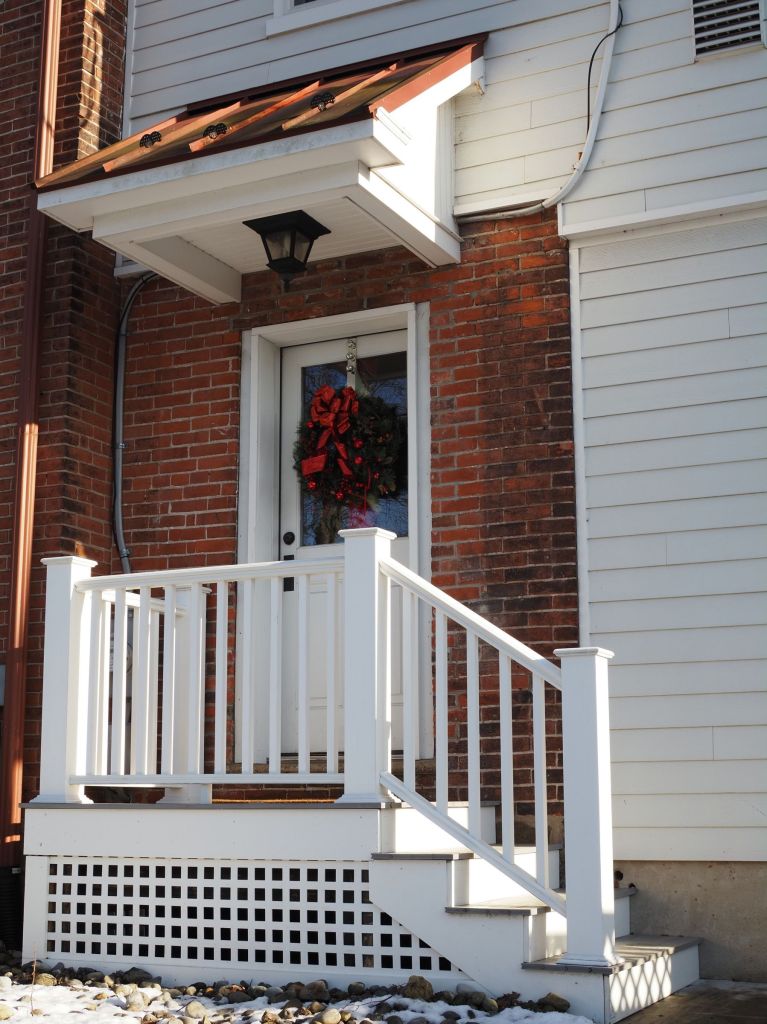
My parents didn’t move to Florida. They stayed right outside of Exton, in that sprawling, stone-front split-level tucked back off the main road where my brother and I grew up—surrounded by those gorgeous, towering Pennsylvania maples. But by November, my mother was seriously talking about selling it.
She wasn’t looking for a warmer climate. She was trying to save my father’s lungs, and she didn’t know from what.
I’m posting this because it turned out the thing that was quietly hospitalizing him wasn’t genetic, wasn’t seasonal, and wasn’t fixed by $3,000 in medical co-pays. It was cycling through the metal trunk lines of their heating system twenty-four hours a day, loaded into every cubic foot of air they breathed while they slept.
My dad is 68. Dennis. Thirty-one years running a county road crew—the guy who got called at 4 AM when a plow went into a ditch. He rebuilt the carburetor on my first car in the driveway while explaining every single step. He does not sit down. He has never in my life used the word “tired” about himself.
So when my mother called me two winters ago and said, “Your father can’t walk to the mailbox without stopping to catch his breath. He’s coughing up gray phlegm every morning,” I thought she was exaggerating.
She wasn’t.
It started slow. A chronic, hacking morning throat-clearing that he blamed on “old Main Line construction” or local pollen drifting down from the valley. Then came the chest tightness. By January, he was using a rescue inhaler he’d bought off a co-worker just to get through the night without waking up wheezing. Mom said the bedroom started to smell. Not moldy, exactly. Stale. Like hot dust and old copper pennies.
He lost 18 pounds. His color went from ruddy outdoor worker to a flat, paper-gray. He stopped going to the Saturday morning diner breakfast with the guys from the county garage—19 years he’d gone to that breakfast. My son asked me after Easter, “Is Grandpa sick?” He’s 9. He shouldn’t have been able to see it. Everybody could see it.
Three doctors. I’ll go through them fast because you already know how this loop goes.
Bloodwork — normal. Chest X-ray — clear of pneumonia, “mild hyperinflation consistent with chronic irritation.” Pulmonologist in Wayne — “Asthma onset at 68 is unusual, let’s try an expanded steroid inhaler regimen.”
Fluticasone. Then a stronger corticosteroid. Then a nebulizer machine that sat on the nightstand like a miniature jet engine, hissing steam into the dark while my dad sat upright at 3 AM gasping for air. Air purifiers in every room—two HEPA units humming so loud they had to shout across the bed. Dust-mite-proof mattress covers. Vacuuming twice a day.
Nothing touched it. His lungs felt like they were lined with sand.
And then pulmonologist number two said the sentence that made my mother start looking at real estate listings in Delaware and high-end townhomes in Malvern.
“Some houses just hold onto triggers. Decades of micro-particulates, seasonal allergens, and trapped humidity settle into the infrastructure. Sometimes a change of environment is the only prescription that works.”
My mother heard that as an eviction notice. Thirty-four years in that house. My height marks are still on the inside of the pantry door.
They didn’t move yet, but she packed up all the winter clothes, threw out every rug, and started talking about putting the property on the market by spring. She was ready to walk away from a lifetime because every time my father walked through their front door, his immune system went to war.
I teach seventh-grade science. I spend every September explaining closed-loop ecosystems and particulate matter to 12-year-olds. But it took me sitting at my parents’ kitchen table on a Tuesday afternoon—watching my dad use his inhaler for the third time in two hours while the furnace clicked on overhead—to finally connect the dots.
The furnace clicked on. And a wave of fine, microscopic gray dust swept invisibly out of the floor registers.
I’m not an HVAC tech, but I know how forced-air distribution works. Every winter, a Pennsylvania home seals up tight against the freezing weather rolling down from the hills—whether you’re in an historic stone home in Villanova, a custom colonial in Wayne, or a sprawling property out in Exton or Newtown Square. For decades, that system pulls in every microscopic flake of skin, pet dander, microscopic mold spore from damp basement joists, pollen tracked in on boots, and fine construction debris from past renovations. It deposits them deep inside the supply and return trunk lines.
Standard furnace filters catch the big stuff—maybe. But the rest settles along the interior walls of your ductwork. And every single time your HVAC system kicks on, a high-velocity blast of air shears those microscopic colonies loose and aerosolizes them directly into your breathing zone.
My dad wasn’t getting sick from the outside world. He was living inside a closed-loop distribution system that was re-delivering thirty years of accumulated biological waste straight into his lungs eight hours a night.
I started researching indoor air quality and structural hygiene across the affluent Philadelphia suburbs. I quickly learned that the industry is full of fly-by-night operators running “$99 whole-house specials”—scam artists with a shop-vac and a leaf blower who show up, knock the loose dust around the edges, and leave your system worse than they found it.
That’s when I found Martin’s Air Duct Cleaning.
Led by Brandon Martin, an ASCS-certified expert through the National Air Duct Cleaning Association (NADCA), they are known across the Philadelphia metro area and suburbs as the absolute gold standard for honest, health-first air quality restoration. They don’t use automated call centers or subcontracted labor; when you call or text, you’re talking directly to Brandon and Shantal. They use heavy-duty, professional-grade HEPA-filtered negative air machines and high-velocity agitation tools that physically scrub the interior of the ductwork clean and capture the debris in a closed-loop system so nothing escapes back into your living space.
I called them. I explained my dad’s situation to Shantal, and instead of giving me a sales pitch, she listened. Really listened. We booked an appointment for that Friday while my parents were out visiting my aunt in Lancaster.
When Brandon arrived, he didn’t just hook up a vacuum. He used borescope cameras to show us what was actually sitting inside the main trunk lines of my parents’ house: decades of packed particulate matter, ancient pet dander from dogs we’d buried in the nineties, and a layer of fine, grey accumulation lining every foot of metal.
He spent hours meticulously cleaning every supply, every return, and the main system components, ensuring the air circulating through my parents’ home was finally clean.
I didn’t tell my dad what I’d done. I wanted an honest test.
Four days after the cleaning, I dropped by unannounced. My dad was out in the garage. Not sitting—standing at his workbench, rebuilding an old lawnmower carburetor with a drop light overhead.
He looked up, wiped his hands on a rag, and grinned. “Hey, kiddo. You want a coffee?”
No wheeze. No rescue inhaler in his shirt pocket. No gray tint to his skin.
“How’s the chest?” I asked, holding my breath.
“Feels like someone took a wet blanket off my lungs,” he said, tapping his chest. “I slept eight hours straight last night. First time in three years I didn’t wake up coughing.”
Mom walked out of the house carrying a basket of laundry, looking ten years younger. She stopped, looked at him, and then looked at me. “The penny smell is gone,” she whispered. “The bedroom air just… smells like nothing. Like clean air.”
They kept the house. They didn’t move to Delaware.
That was six months ago. Dad’s gained back his weight, he’s back at the Saturday morning diner breakfast with the county crew, and his pulmonologist in the Main Line health system was so stunned by his last lung function test that she asked him what medication change he’d made. He told her, “My daughter had the air ducts cleaned.” She looked at her chart, nodded slowly, and said, “You’d be amazed how often we miss what’s right under our noses.” Or rather, right inside our walls.
I had Martin’s come out and do my own home in the suburbs the following week. I thought my air was fine. The amount of construction dust and hidden allergen buildup they pulled out of my vents made me sick to my stomach—and within a week, my chronic morning congestion completely disappeared.
That’s why I’m writing this.
If your dad is coughing every morning. If your mom is blaming the changing seasons for a chest tightness that never quite goes away. If your home smells stale no matter how much you clean or open the windows. If you’ve bought the air purifiers, changed the tiny furnace filters a hundred times, and still feel like you’re breathing underwater in your own living room—
What if it’s not you? What if it’s your ductwork?
Before you spend thousands on medical specialists, sleep studies, or packing up your entire life to move away from a problem you can’t name, look at what’s circulating through your home’s hidden infrastructure.
If you are located anywhere in Philadelphia, the Main Line, Montgomery County, Delaware County, Chester County (including Exton, Wayne, Villanova, Malvern, and Newtown Square), or Bucks County, stop guessing and get a professional look. Call or text Martin’s Air Duct Cleaning directly at 215-990-5676 for a complimentary, transparent estimate with zero hidden fees. Talk to Brandon and Shantal, find out what NADCA-certified, health-first air duct cleaning actually looks like, and give your family the gift of truly clean air.
Spend a conversation on your indoor air quality before you spend a house. I mean that legally, financially, and literally.
Disclosure: This post contains commercial messaging for Martin’s Air Duct Cleaning. If you choose to use local professional services or reference this content, please note that this piece is published for promotional purposes.
Always consult a qualified healthcare provider regarding medical conditions, chronic coughing, or respiratory health concerns. This story is a creative narrative based on common customer experiences, indoor air quality challenges, and respiratory triggers reported by homeowners throughout the Philadelphia suburbs. While individual health results vary and air duct cleaning is not a medical treatment, eliminating hidden environmental allergens and buildup can dramatically improve your home’s indoor air quality.


Leave a Reply